
When is it celebrated?
Ahmedabad, Gujarat, India · Gujarati Amanta · IST
Local temple and community observances may differ. These are festival dates; consult your local Panchang for puja timings.
Aarti, music & prayers for this festival
Prayers · Sanskrit
कर्पूरगौरं करुणावतारं संसारसारं भुजगेन्द्रहारम्।
Karpura Gauram Closing Prayers
Karpura Gauram Closing Prayers — prayer lyrics with language options for devotional reading.
Mantras · Sanskrit
महामृत्युंजय मंत्र
Mahamrityunjaya Mantra
Mahamrityunjaya Mantra — mantra lyrics with language options for devotional reading.
Chalisa · Hindi
श्री शिव चालीसा
Shiv Chalisa
The revered forty-verse hymn dedicated to Lord Shiva, invoking auspicious protection, peace, and spiritual liberation.
Ashtak · Sanskrit
बिल्वाष्टकम्
Bilvashtakam
The sacred eight verses offering trifoliate Bilva leaves to Lord Shiva, purifying the sins of past births and bestowing peace and auspiciousness.
Stuti · Sanskrit
शिव ताण्डव स्तोत्रम्
Shiv Tandav Stotram
The monumental Sanskrit stotra composed by Ravana, capturing the cosmic rhythm, raw power, and beauty of Lord Shiva’s cosmic dance.
Stuti · Sanskrit
श्री रुद्राष्टकम्
Shri Rudrashtakam
The famous hymn composed by Goswami Tulsidas from Ramcharitmanas (Uttara Kanda), glorifying Lord Shiva as the all-pervading consciousness.
About the festival
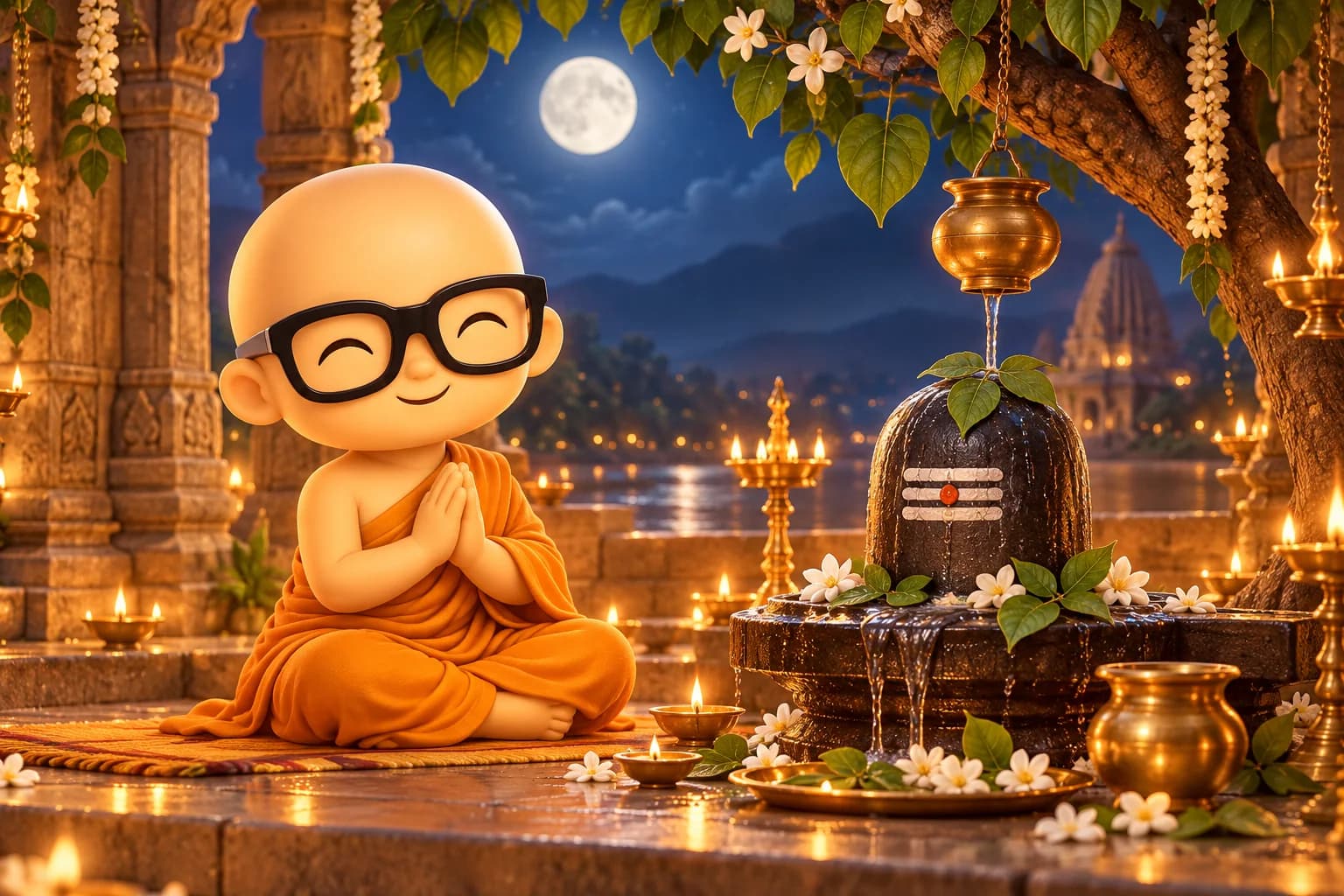
Shivaratri means “the night of Shiva”; Maha Shivaratri is the principal annual observance among several monthly Shivaratris. Devotees gather at temples or worship at home, often offering water or milk to a Shiva linga, bilva leaves, and flowers. Many keep vigil and chant Shiva’s names through the night. Some traditions divide worship into four night watches, while others follow a simpler family puja.
The festival’s narratives are not uniform. Puranic traditions associate the night with Shiva and Parvati, the appearance of the linga of light, or Shiva’s cosmic dance; different communities emphasize different accounts. The shared practice is devotion to Shiva and a night set aside for discipline and reflection, rather than a single universally accepted origin story.
Meaning and tradition
Night, silence, and fasting can create space to notice habits that usually run without attention. In Shaiva traditions, Shiva may be approached as the compassionate Lord, the great yogi, or the reality beyond change. The observance invites a person to meet desire and distraction with steadiness. These interpretations sit alongside, rather than replace, each community’s own theological account.
Worship and observance
Offerings often include clean water, milk where customary, bilva leaves, flowers, and fruit. Devotees may repeat “Om Namah Shivaya,” read Shiva stories, sing bhajans, or perform abhisheka. Some observe a fast; practices range from a full fast to fruit or a simple meal. Do not treat fasting as compulsory: children, pregnant people, older adults, and anyone with a health condition should follow appropriate medical advice and family guidance.
A night vigil may include temple visits or prayer at home. Follow the local Panchang for puja timings, since the relevant tithi and night divisions vary by location. Keep offerings modest and avoid wasting food or water.
Maha Shivaratri is observed on Krishna Chaturdashi in a lunar month whose name varies by regional calendar. Puranic explanations and puja practices differ; no single origin narrative or fasting rule is universal. Check the local Panchang for tithi and night puja timings.
A reflection for daily life
Choose one manageable practice—silence, prayer, service, or restraint—and carry its steadiness into ordinary life. The night can be a prompt to pause before reacting, examine a habit honestly, and make room for compassion toward oneself and others.
In today’s world
A meaningful observance need not require an all-night vigil or a strenuous fast. Accessible temple arrangements, quiet home worship, hydration where health requires it, and respectful use of water and flowers help more people participate. Meditation or a short period away from screens can preserve the spirit of attention.
Topics: Maha Shivaratri · Shiva · Shaivism · Night Vigil · Meditation · Fasting · Abhisheka
← All festivals