
When is it celebrated?
Ahmedabad, Gujarat, India · Gujarati Amanta · IST
Local temple and community observances may differ. These are festival dates; consult your local Panchang for puja timings.
About the festival
At the mid-January solar transition, the Sun enters Makara (Capricorn) in the traditional Indian zodiac. The name Uttarayana refers to the northward half of the Sun’s apparent annual journey. Across India this transition is observed in different ways and under different names; in Gujarat, Uttarayan is especially associated with kite flying and gathering outdoors.
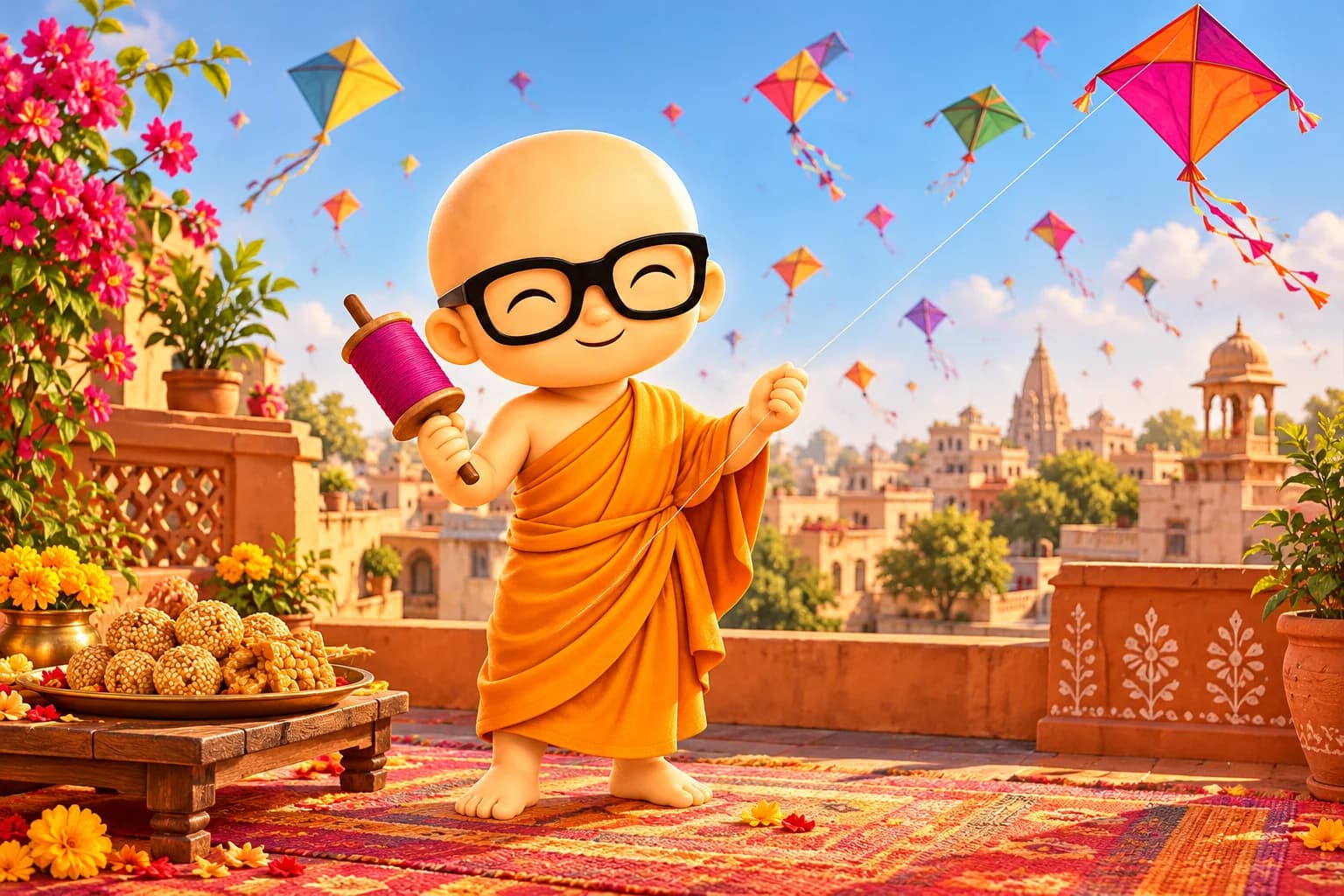
The day’s bright rooftops are only one part of the celebration. Families prepare undhiyu and chikki, exchange sesame and jaggery sweets, visit relatives, and make donations. The seasonal foods are practical as well as festive: sesame, jaggery, and warming dishes are familiar winter ingredients. Customs vary from household to household, and the public kite festival has become a distinctive Gujarati expression of the date.
Meaning and tradition
The Sun’s turning gives the festival a language of renewal and movement toward light. The kite offers a vivid image of attention and freedom: it rises through skill, patience, and a changing wind, yet remains connected to the hand that guides it. Sharing food and giving to others keep the celebration rooted in community rather than spectacle alone. These are reflective meanings, not a single required doctrine for every participant.
Worship and observance
Many households begin with a bath, prayer, or a visit to a temple, then spend the day with family and neighbours. Kite flying is customary in Gujarat, but it is optional; enjoy it from a safe terrace or an organized public event. Use soft, non-metallic thread, keep clear of power lines and roads, and collect cut string so it cannot injure people or birds. Avoid glass-coated manjha and never fly near airports.
Seasonal foods commonly include undhiyu, sesame-jaggery chikki, and other regional dishes. Sharing a meal or making a donation is a simple way to include people who may not be able to join the rooftop festivities. Exact puja practices and auspicious timings follow the local Panchang and family tradition.
Solar transition: Makara Sankranti, the Sun’s entry into Makara in the traditional zodiac. Gujarat’s kite-flying and food customs are regional practices, not universal Hindu requirements. Exact observance dates and timings can vary by location and calendar calculation; use the local Panchang.
A reflection for daily life
Celebrate together while looking after neighbours, children, animals, and public spaces. Choose safe materials, help clean up after the event, and make room for people who prefer a quieter observance. A small act of generosity can carry the day’s spirit beyond the festival itself.
In today’s world
A crowded kite festival can create injuries, tangled power lines, and waste. Community-organized flying zones, bird-rescue contacts, safer thread, and post-event cleanups make the celebration more welcoming. People can also mark the day through a shared meal, a walk in the winter sun, or charitable giving without flying kites.
Topics: Uttarayan · Makara Sankranti · Gujarat · Kite Festival · Seasonal Food · Generosity · Community
← All festivals