
When is it celebrated?
Ahmedabad, Gujarat, India · Gujarati Amanta · IST
Local temple and community observances may differ. These are festival dates; consult your local Panchang for puja timings.
About the festival
The best-known account appears in the Bhagavata Purana: the ruler Hiranyakashipu demands that his son Prahlada worship him, but Prahlada remains devoted to Vishnu. After other attempts to harm the child fail, Holika—Hiranyakashipu’s sister, who is said in the story to possess protection from fire—takes Prahlada into a blaze. The protection does not save her; Prahlada survives. The narrative remembers devotion enduring under coercion and the failure of power used to terrorize.
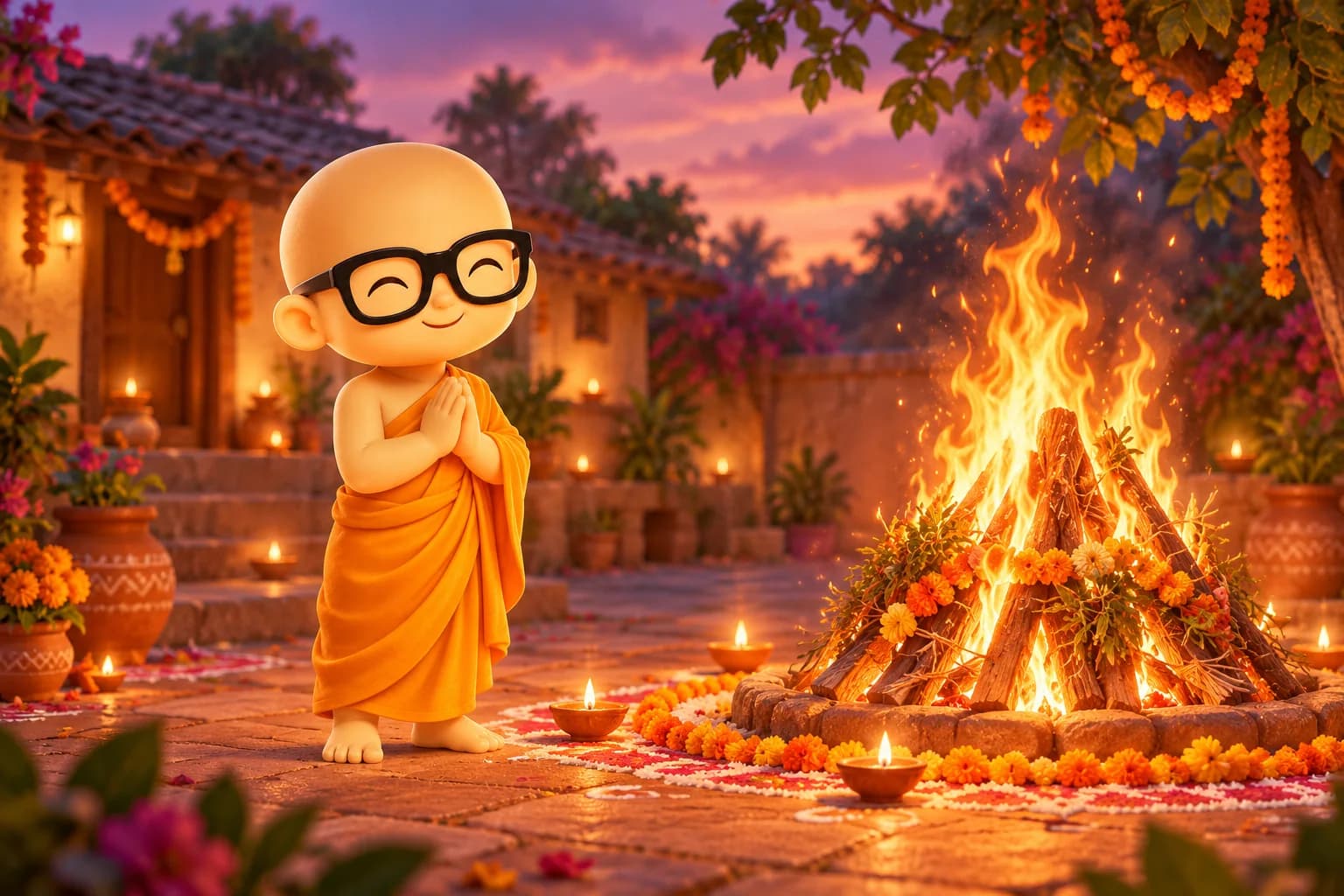
On the evening before Holi, many communities light a communal fire called Holika Dahan or Chhoti Holi. Families gather, offer prayers, and welcome the following day’s colour celebration. Some local customs tell related but distinct stories. This bonfire observance is separate from Dhuleti, the colour festival in Gujarat, and the two have different dates in the calendar.
Meaning and tradition
The story asks what faithfulness means when authority demands flattery or surrender of conscience. Prahlada’s courage is not aggression; he refuses to return hatred for harm. The fire also invites reflection on what a community should leave behind—fear, cruelty, or arrogance—without treating the burning of a figure or object as permission to target real people.
Worship and observance
Holika Dahan is generally held after sunset on the locally determined Phalguna Purnima, but the appropriate time depends on tithi and regional rules. Follow the local Panchang and community arrangements; this calendar guide does not provide a puja muhurta. A family may offer grains, coconut, or a prayer at the fire, but practices differ.
Attend only an authorized, supervised fire. Keep children and clothing at a safe distance, do not burn plastics, painted wood, chemicals, or waste, and follow local fire restrictions. A small community gathering, a reading of Prahlada’s story, or a symbolic lamp is a meaningful alternative where open fires are unsafe or prohibited.
The Prahlada and Holika account is told in Bhagavata Purana, Book 7. Regional bonfire customs and explanations vary. Holika Dahan is the evening observance; Dhuleti/Holi is a separate following-day festival in this Gujarat calendar. Exact timing follows the local Panchang and fire-safety rules.
A reflection for daily life
Prahlada’s story encourages people to hold to conscience under pressure while refusing cruelty in return. Communities can use the occasion to name harmful habits they want to change and to repair relationships without making anyone a target.
In today’s world
Bonfires can worsen local air quality and create burn hazards. Smaller permitted fires, clean natural fuel, shared fire-safety planning, and non-fire observances reduce harm. The story’s central question remains relevant wherever fear or authority is used to silence a person’s convictions.
Topics: Holika Dahan · Prahlada · Vishnu · Bhagavata Purana · Devotion · Good over Evil · Community
← All festivals