
When is it celebrated?
Ahmedabad, Gujarat, India · Gujarati Amanta · IST
2026 · This year
Phaguna, Vad Padvo · Past
Dhuleti (colours). Holika Dahan is listed separately.
Checked 2026-10-04 · Drik Panchang
2027 · Next year
Phaguna, Vad Padvo · Upcoming
Dhuleti (colours). Holika Dahan is listed separately.
Checked 2026-10-04 · Drik Panchang
Local temple and community observances may differ. These are festival dates; consult your local Panchang for puja timings.
About the festival
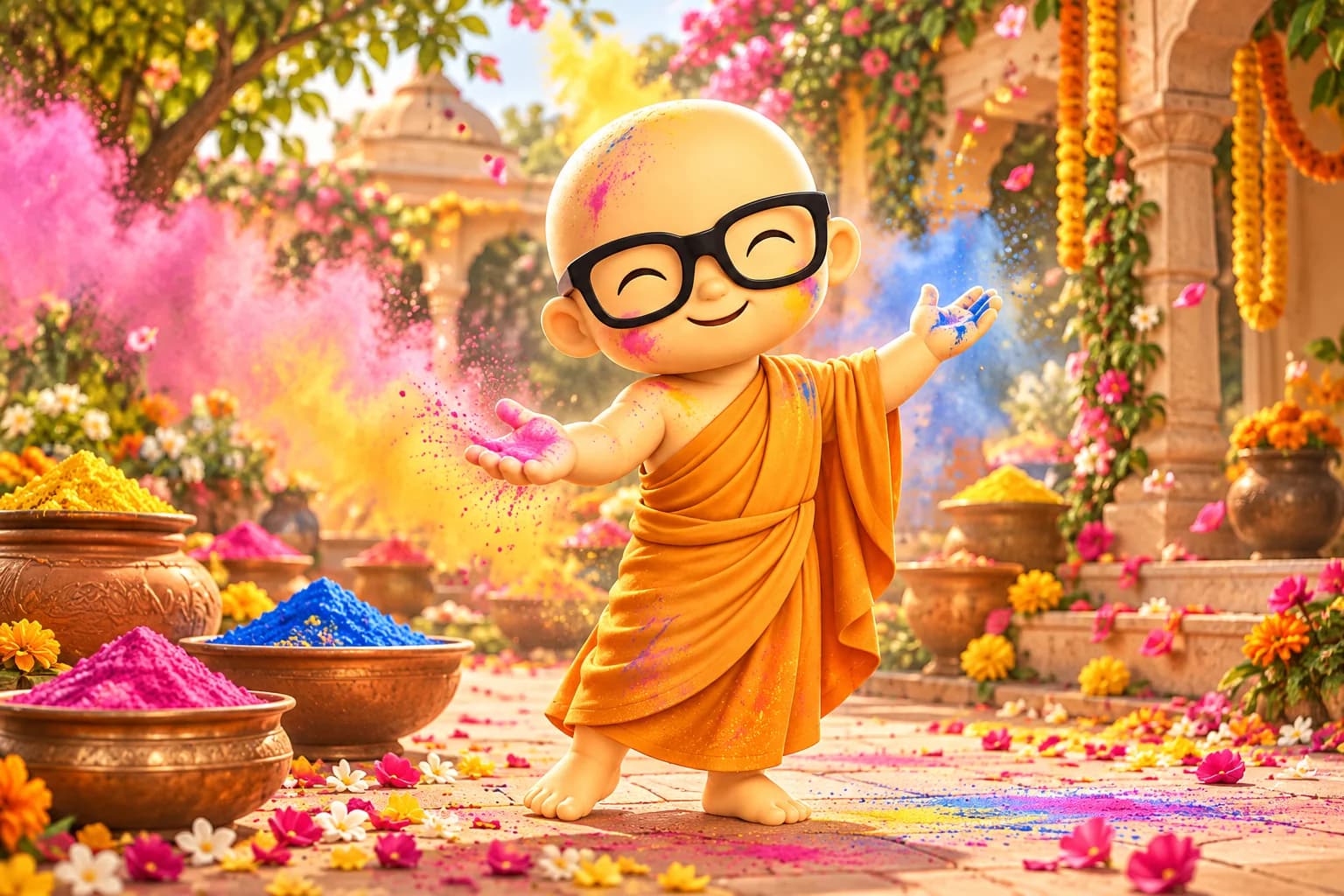
The colour festival arrives after the full-moon bonfire. In Gujarat, Dhuleti is the familiar name for the day when people gather outdoors, greet friends and neighbours, and play with coloured powder or water. In Braj and Vaishnava traditions, Holi is also associated with Krishna, Radha, and playful exchanges of colour. Other communities emphasize the end of winter, the beginning of spring, or the renewal of social ties. No single story explains every region’s practice.
Food, music, and visits are part of many celebrations. Holi can open a chance to make peace after disagreements, but reconciliation is meaningful only when it is welcomed; the festival does not require anyone to accept unwanted touching, colour, or water. Holika Dahan takes place separately on the prior evening, and local names and dates should be read in their regional calendar context.
Meaning and tradition
Colour can make social boundaries feel less fixed for a day, but genuine welcome depends on consent and respect. The festival’s joy is strongest when it leaves room for people to choose how they participate. Seasonal renewal can also mean letting go of grudges, repairing a relationship, or beginning again without excusing harm.
Worship and observance
Families may visit one another, share sweets such as gujiya or regional snacks, sing, dance, and play with dry gulal or water. Customs differ; there is no need to use colours or water to participate. Use skin-safe, washable colours, keep them away from eyes and mouths, and ask before applying colour. Avoid throwing balloons, staining public property, or directing water at strangers. Keep drinking water available and provide a quiet, colour-free space for children, elders, and people with sensitivities.
Check local arrangements and weather. In Gujarat’s calendar, Dhuleti follows the separately listed Holika Dahan; puja and bonfire timings belong to the prior evening and local Panchang.
Holi has diverse regional narratives and practices, including Krishna-Radha traditions in Braj. Gujarat observes Dhuleti as the colour day after Holika Dahan; Holika Dahan is a separate evening observance. Names and tithis vary by calendar and locality.
A reflection for daily life
A joyful gathering also practises hospitality: invite without pressure, respect a clear no, and include neighbours who may be isolated. If old conflict is present, offer a sincere apology or conversation rather than treating the holiday as an automatic reset.
In today’s world
Synthetic pigments, plastic packaging, water waste, and non-consensual play can make Holi unsafe or exclusionary. Choose washable natural or certified skin-safe colour, reduce single-use materials, conserve water, and establish clear consent norms for public events. People can celebrate with music, food, and visits instead of colour play.
Topics: Holi · Dhuleti · Spring · Colours · Krishna · Community · Renewal · Consent
← All festivals